

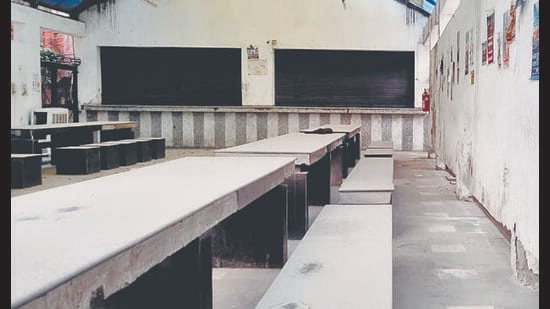
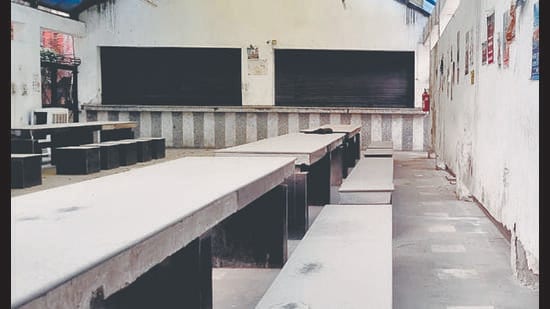
Amid the ongoing West Asia conflict, the LPG availability crisis has also struck college canteens and mess services in Delhi hostels and educational institutions, with many resorting to measures like restricting the menu and marginal increase in prices.
A third-year PhD student of Indian Agricultural Research Institute (IARI), said the hostel mess has trimmed the menu and are only serving dal-rice for lunch and dinner while the breakfast has been reduced to bread and butter.
“We understand the situation is different. But the food that we are getting is not sufficient to meet our nutritional requirement. I have to go on field work as part of my research and with the summer heat, we get drained out quickly. \Not having nutrients-rich food is an additional concern now,” the student said.
At Jamia Millia Islamia also, students said prices have increased at the canteen and some food places inside the campus have shut down.
“So, far there are no issues in the hostel mess, but the canteen is largely dependent on LPG cylinders. While prices of some food items have been increased by ₹5-15, other food places like the women-run DastarKhwan canteen has been shut since the past few days. I am mostly dependent on canteen food for lunch,” the student, a day scholar, said.
Chief public relations officer of JMI, Saima Saeed, said, “The hostel mess and canteen operations are running smoothly like usual.”
Meanwhile, similar situation exists at the Jawaharlal Nehru University. A PhD student Mosam, 24, said students have gradually become used to the new normal.
“We get chapatis only once a day, the second meal has rice and no chapatis. It is a shift for many students who can’t survive on rice for both their meals. Deep fried food items like poori and bhature are completely off the menu. Dhabas around the campus have marginally increased prices, and are mostly offering packaged food,” said Mousam. “More than half of JNU students reside in hostels, so even small changes are impacting large number of students,” she added.
However, the JNU administration claimed that canteen and mess operations are largely not impacted by the LPG crisis.
Students from Delhi University reported similar problems for the past two to three weeks. “The hostel mess has stopped giving chapatis during lunch and has reduced the variety of items being served. Earlier, we used to get two vegetables for every meal, but now we get only one. It is currently not a major issue as we have readily available snacks and do not feel that our nutrient intake is reducing. But it must be a problem for the day scholars as the college cafe has stopped serving everyday items such as egg and maggi,” said Annu Koshy, 21, a fourth-year student from St. Stephen’s College.
A faculty member at the college blamed the government for the crisis. “The college has definitely been impacted due to the ongoing shortage of LPG cylinders. Currently, the college is trying to economise on cylinders, and items are limited in the cafe. I think the problem began due to the government’s lack of foresight and the government needs to solve this. Colleges like ours which are educational and partly residential should get cylinders regularly,” the professor said.
A student from south campus’ Ram Lal Anand College reported that the prices had increased on Thursday. “A plate of dosa, which usually costs ₹40, is now priced at ₹50. The canteen staff said that the price of multiple items on the menu had been increased just for today due to a shortage of LPG cylinders, but I am worried that it will continue for a while,” he said.
In Miranda House college, students living in the hostel staged a protest on Wednesday, stating that they were not being served proper meals and that evening snacks had been replaced by packaged items. Students also said that the quality of food had degraded since the gas shortage began.